Local SEO built on what actually ranks the map, with the evidence on the table
Local SEO gets a business found when people nearby search for what it sells: in the map results, the ordinary results below them and Google's AI features. Plenty of advice about it is guesswork. These four pieces of evidence shape how we plan every local campaign.
Updated · Boltly, based in Melbourne, working Australia-wide
Google's own help
3
factors decide local results: "mainly based on relevance, distance and popularity", with the third explained under the heading prominence.
Google Business Profile Help, read 4 Oct 2026
Practitioner survey
32%
of the weight in the local pack goes to Business Profile signals, the largest group in the 2026 expert survey, ahead of reviews at 20%.
Whitespark Local Search Ranking Factors 2026, published 6 Nov 2025
Consumer survey
74%
of consumers only care about reviews from the last three months, so a review habit beats a one-off push.
BrightLocal Local Consumer Review Survey 2026
Click study
68%
of US Google searches from January to April 2026 ended without a click, so your profile is often the only page people read.
SparkToro with Similarweb, published 8 Jun 2026
What local SEO means, in one entry
Any business that serves a physical area, from a shopfront to a service van, needs people nearby to find it at the moment they're ready to call, book or walk in.
local SEO noun
- The work of making a business appear when people search for a service near them: in the map results (the local pack), in Google Maps, and in the ordinary results below.
- The signals that work affects: a Google Business Profile, reviews, consistent listings of name, address and phone, and pages on the business's own site about the places it serves.
- The measure of it: calls, direction requests, bookings and enquiries from the areas the business actually serves, tracked place by place.
For a longer read, see our guide what is local SEO.
Two of Google's three local factors are yours to move
Every legitimate local SEO task improves relevance, distance or prominence. When a profile stops climbing, the useful question is which of the three is weakest, not which tactic is fashionable.
You can move it
Relevance
How well the business matches the search. An electrician searched for "switchboard upgrade" needs that service, in those words, on the profile and the site, under the right category.
- Categories set exactly and every profile field complete
- Service and area pages in customers' own words
Mostly fixed
Distance
How far the business is from the searcher, or from the place named in the search. You can't move your premises, but you can describe your reach accurately. Google's guidelines say a service area shouldn't extend beyond about two hours of driving time from where you're based.
- A real address, or a service area with the address hidden
- Service areas that match where you actually travel
You can move it
Prominence
How well known the business is. Google's help points to links to your business and to reviews: more reviews and positive ratings can help a business's local ranking.
- A steady habit of asking for genuine reviews, answered in a person's voice
- Local links earned from suppliers, clubs and press
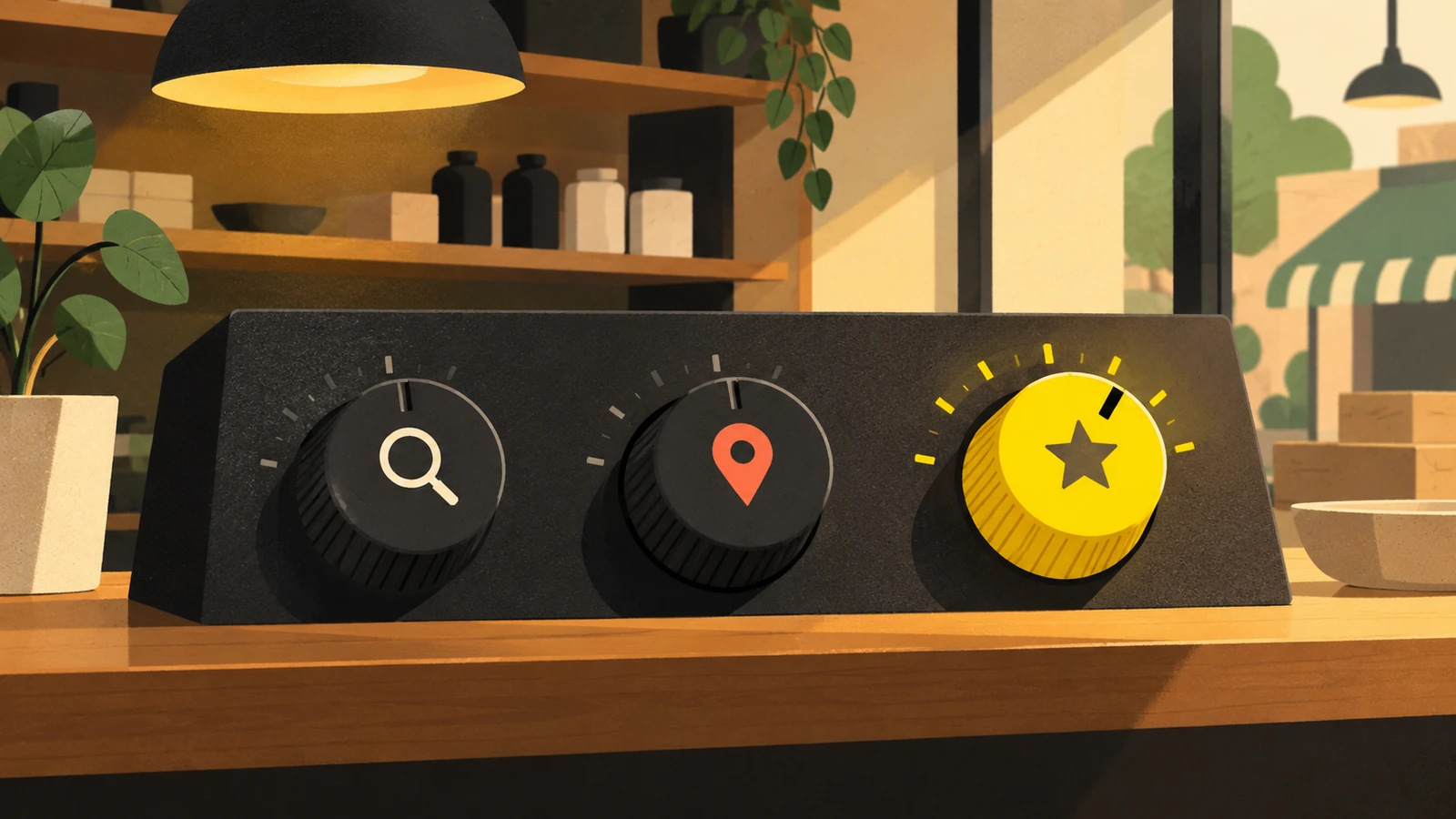
How practitioners weigh the local pack, factor group by factor group
Google doesn't publish weights. Whitespark's survey of local search practitioners estimates them. Read it as informed opinion rather than Google's formula, and as a guide to where an hour of work is likely to count.
- Business Profile categories, details, completeness 32%
- Reviews count, recency, ratings, replies 20%
- On-page the site's content and location signals 15%
- Behavioural clicks, calls, direction requests 9%
- Links links pointing to the site 8%
- Citations consistent listings elsewhere 6%
- Personalisation the searcher's own history 6%
- Social social profiles and activity 4%
Two things follow. The profile and reviews together account for over half of the estimated weight, which is why our plans start there. And citations, once the main event of local SEO, now sit near the bottom: worth cleaning up once and keeping consistent, not worth paying for by the hundred.
Six workstreams, and how often each one is touched
These only work in combination, so every plan runs all six as one programme. A profile set up in January and left alone has started slipping by June, because competitors keep adding reviews and photos.

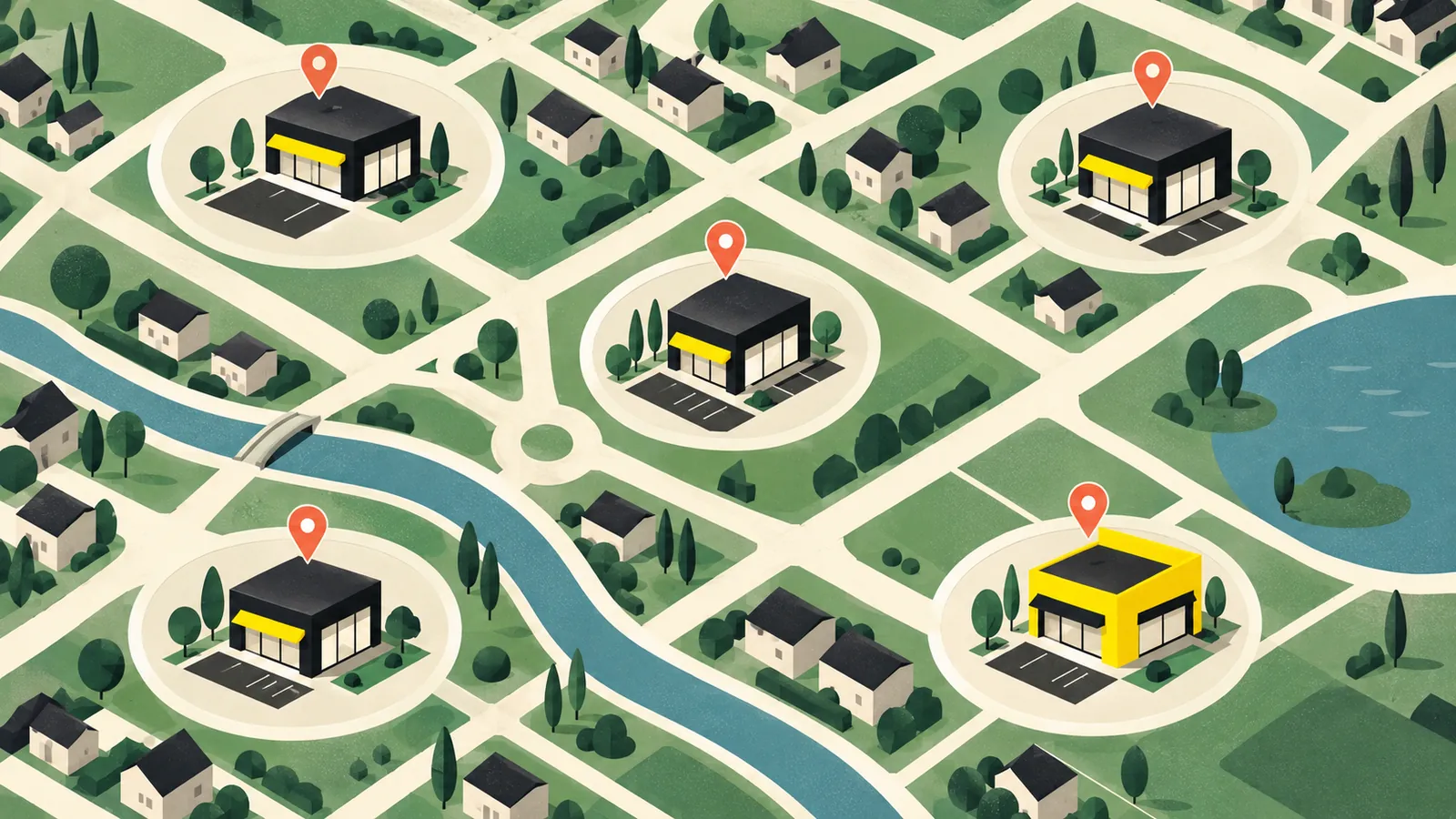
Several branches without the pages competing against each other
The common mistake is one page copied for every suburb with the name swapped. Google's spam policies describe doorway pages as substantially similar pages aimed at different places, and a set like that can drag the whole site down.
Copied pages
- Same text, suburb name swapped
- One profile trying to cover every branch
- Reviews pooled, so no branch stands out
- Branches outranking each other in the same pack
Differentiated pages
- Each branch page has its own address, team, hours and nearby jobs
- One verified Business Profile per real location
- Reviews tied to the branch that earned them
- Each branch owning the pack around its own door
Get it right and a business with five branches can rank in five areas at once. Our multi-location and franchise SEO page covers the structure in detail, including what to do when two branches sit close together.
Suspended, duplicated, held by an old agency, or hit by an unfair review
Each of these four emergencies has an official route through Google's own tools, and most of the damage comes from skipping it: opening a second listing, appealing before fixing the cause, or arguing with a reviewer in public.
The profile was suspended overnight
Google's appeals tool shows the restricted profile, the reason given and the policy it says was broken. Fix that cause first, then appeal once.
- Gather evidence where the name and address match the profile: business registration, a licence or a utility bill.
- Once you open the evidence form, submit it within 60 minutes or it won't attach to the appeal.
- Don't create a new profile for the same business while the appeal is under review.
- If it's denied, you can ask for one additional review and add evidence you missed.
Two or three listings for one business
An old address, a previous owner or an agency's test listing can each leave a copy. Google allows one profile per business, and a profile it treats as a duplicate won't show in Search or Maps.
- Find every copy on Maps and save its link before changing anything.
- Claim each copy, or request ownership if someone else holds it.
- Ask Google to merge copies into the one you keep, or remove a copy you made by mistake.
- Removing a profile deletes its content and managers, so check twice which one goes.
An old agency or web designer still owns the profile
You should be the owner, with any agency added as a manager. If someone else holds a shopfront profile, Google's request-ownership route applies.
- Find your business at business.google.com/add and choose Request access.
- The current owner has three days to respond; if they don't, you may be able to claim it.
- A service-area business with no shopfront asks Google support to transfer ownership instead.
- Write "the client owns every account" into any agency agreement before you sign.
A one-star review from someone who was never a customer
Google removes reviews that break its content policies, not ones that are unfair but genuine, and says it doesn't get involved in disputes between businesses and customers.
- Report it from the profile and follow it in the Reviews Management Tool; Google says checks usually take several days.
- If it's found within policy, you have one appeal left.
- Reply once, calmly and with facts. The reply is for the next reader, not the reviewer.
- If bad reviews arrive with a demand for money, use Google's separate extortion report.
Sources: Google Business Profile Help, "Fix suspended or disabled profiles", "Resolve duplicate profiles and ownership issues", "Request ownership of a Business Profile" and "Report inappropriate reviews on your Business Profile". Read 5 October 2026.
Local businesses inside Google's AI answers
Google's guide to its AI features says they rest on its core ranking systems, need no special markup or AI text file, and that a Business Profile helps local businesses appear in AI responses as well as ordinary results.
Keep the profile complete, keep your name, address, phone and hours identical on your site and every listing beside this text, and publish useful local pages. Other assistants haven't published how they pick local businesses, so we don't promise recommendations from any of them. More on our AI search page.
- Google Business ProfileSearch, Maps and AI Overviews
- Apple Business ConnectApple Maps and Siri
- Bing PlacesBing search and maps
- Your own websiteEvery search engine
Three local businesses, three different first months
Example plans, not client results: where we'd start, and how we'd know it was working.
Trade · one service area
Fix the basics, then name the suburbs
Correct the primary category and service area, add a page for each suburb actually covered, and start a review routine after every job.
Checked by calls from the profile, suburb by suburb
Health · several clinics
One profile and one page per clinic
Each clinic gets its own practitioners, hours and parking notes, nothing copied between them, and no testimonials about clinical outcomes under AHPRA's rules.
Checked by each clinic's position in its own area
Hospitality · one venue
Make the profile the menu board
Current photos and menu, exact hours including public holidays, and a written reply to every review.
Checked by direction requests and calls from Maps
Each engagement starts with a written record of where you rank across your area before any work is billed. Every later report is measured against it, and if a pack doesn't move, the report says so and gives the likely reason.

What local SEO costs with us, and how soon it can show
Starter
$500/month
One business, one priority area: profile optimisation, listings clean-up, one priority area page, a review routine and a monthly report.
Growth
$900/month
Competing across a city: Starter scaled up, several area and service pages, local links, listings beyond Google and grid tracking.
Performance
$1,500/month
Several branches or a franchise: a profile and pages for each location, a structure that stops them competing, and combined reporting.
No setup fee and no lock-in; the pricing page has the full detail. On timing, profile fixes such as a wrong category tend to register early; new pages and a review base take longer, and crowded city categories longer again. The audit sets expectations for your market.
Local SEO by city, each written for that market
SydneyMelbourneBrisbanePerthAdelaideCanberraGold CoastNewcastleHobartDarwin
Where the map decides who gets the call
TradiesPlumbersElectriciansDentistsPhysiotherapistsRestaurantsSmall business SEOTechnical SEO
Local SEO questions owners ask before they start
What is local SEO?
Local SEO is the work that helps a business appear when people search for a product or service near them. It covers the map results, Google Maps and the ordinary results below, and it matters most for businesses that serve a physical area, from a shopfront or a van.
How is local SEO different from regular SEO?
Regular SEO competes on content and links, often nationally. Local SEO adds a place: your Business Profile, distance from the searcher, reviews, consistent listings and pages about the areas you serve all feed the map results, which Google says are mainly based on relevance, distance and popularity.
How do I rank in the Google Map Pack?
Work on the factors you can move. For relevance, a complete and correctly categorised profile and pages in your customers' words; for prominence, a steady flow of genuine reviews and earned local links. Distance is mostly fixed, so describe your real service area accurately.
How long does local SEO take?
Google's starter guide says anywhere from a few hours to several months. Profile fixes register first; reviews and new pages build over months. The audit gives you a realistic read for your market.
Do I need a website, or just a Google Business Profile?
Both. The profile appears in the map, but the ordinary local results beneath it are won on your site, and a site gives the searcher who wants detail somewhere to go. The profile and site should say the same thing about your name, address, phone and hours.
How important are Google reviews for local SEO?
Very. Google's help says more reviews and positive ratings can improve a business's local ranking, and BrightLocal's 2026 survey found 74% of consumers only care about reviews from the last three months.
What are citations and NAP?
NAP stands for name, address and phone number. Citations are mentions of that NAP on directories and other sites. Consistent citations help confirm where you are; in the 2026 Whitespark survey they carry less estimated weight than the profile and reviews, so we clean them up once and keep them tidy.
Can you do local SEO for multiple locations?
Yes. Each real location needs its own verified Business Profile and its own differentiated page, never copied text with the suburb swapped. We plan one strategy per location so each ranks in its own area.
Can I have a Business Profile without showing my home address?
Yes, if you go to your customers rather than having them come to you. Google calls that a service-area business: you verify with your real address, then turn off "show business address to customers" and list up to 20 service areas instead. Google says to hide the address only in that case, and it doesn't allow a virtual office or a PO box as a stand-in, so for most sole traders the right set-up is a home base hidden from view.
Are you a local SEO agency near me?
We're based in Melbourne and work with businesses across Australia remotely, by phone, email and video call. Local SEO doesn't need us on site: the work happens in your profile, your listings and your website. We won't claim an office in your city.
How much do local SEO services cost?
Ours are $500 a month for Starter, $900 for Growth and $1,500 for Performance, with no setup fee and no lock-in. The number of areas you want to cover and how crowded your category is decide which plan the free check recommends.
See your own evidence first
The free local visibility check maps where you rank across your area, shows which of the three factors is holding you back, and puts a plan and price in writing.